A Quick Hit: Stankonia
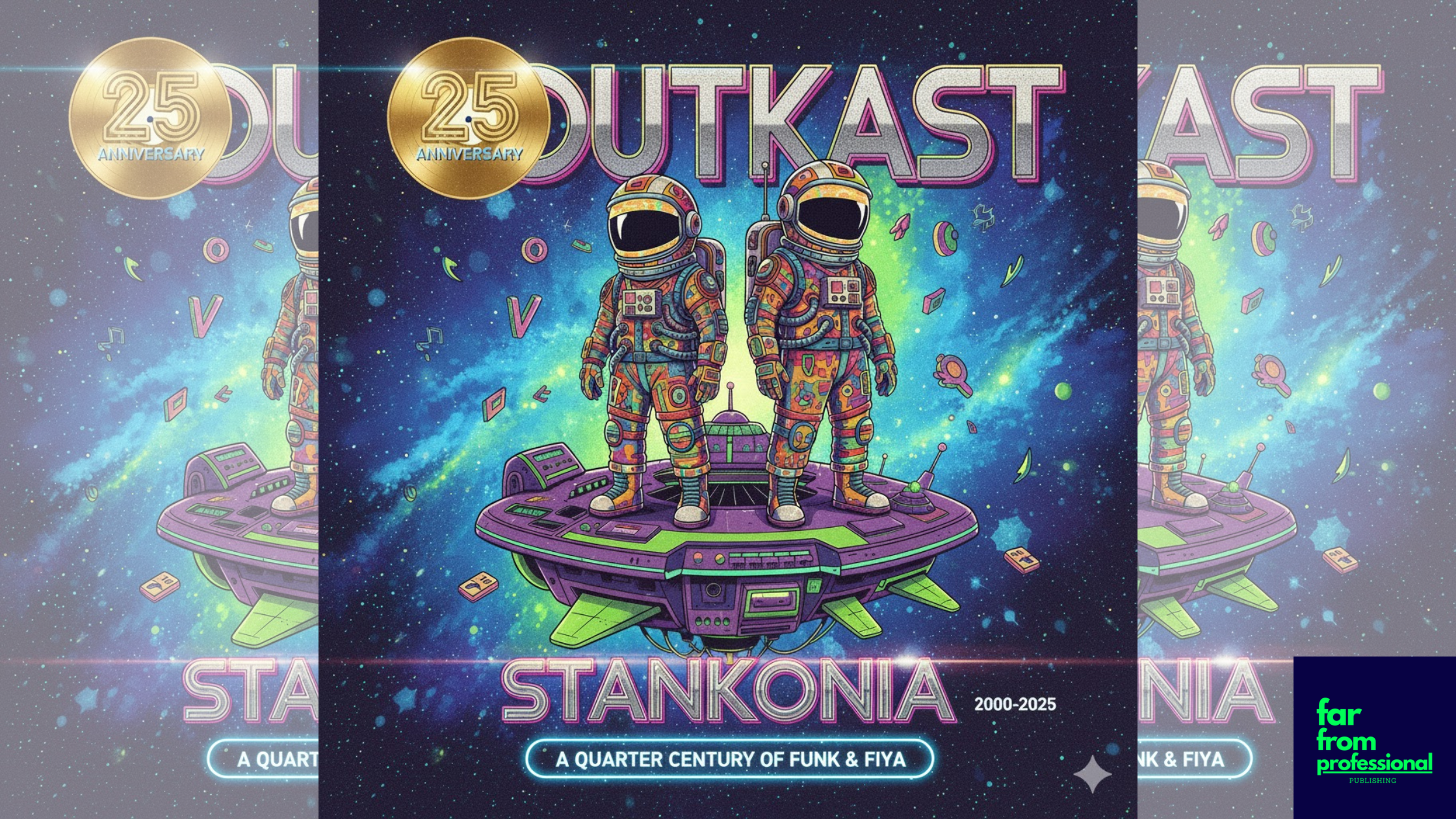
Obviously AI generated art.
Twenty-five years ago, OutKast dropped their last cohesive group project.
On the heels of their critically acclaimed third album, Aquemini, OutKast was ascending not just in the rap game, but in popular culture. No one outside of their circle saw the “Hey Ya!” level of fame they would achieve in 2003, but they had the respect of their peers and a loyal fanbase built by the end of the 1990s. When they released Stankonia on Halloween in 2000, they were on the fourth evolution of their sound. They switched it up on every album, flipping between street stories, extraterrestrial thump, Dirty South funk, and prophetic raps. They were they poet and the player, and their music was a reflection of how their diametrically opposed styles synergized.
Like many great duos—Sony and Cher, Simon and Garfunkel, Hall and Oates—André and Big Boi got to a point where their artistic visions pulled further apart. Stankonia was the duo’s Rubicon. The album’s title is a reference to an imagined place where people can express themselves freely. For OutKast, this meant purchasing Bobby Brown’s Bosstown Studios, renaming it Stankonia Studios, and establishing a place where they had the freedom to record an experiment with their sound and not have studio executives micro-managing their creative process. André and Big Boi wanted to push their version of hip-hop away from the cookie cutter production of late 90s commercial rap music.
To that degree, Stankonia was an absolute success. No other act in that era of rap music sounded like OutKast, and that’s what trailblazers do. It’s what A Tribe Called Quest did and Eric B. and Rakim did, and you can go down the short list from there. There aren’t many people who have revolutionized any given industry. It’s what makes them unique. In art, there are only a few artists who have shown their peers a new way to create, but there are many artists who copy that style and refine it until someone else comes along to break up the monotony. OutKast changed the way critics had to describe Stankonia. Was it techno-rap? What about the funk? What about the gangster shit?
This album was a creative, critical, and commercial success. It debuted at number 2 on the Billboard charts, the first time that happened to an OutKast album. They also had their first number one Billboard hit song with “Ms. Jackson”. Stankonia earned OutKast a Grammy for Best Performance by a Duo or Group (“Ms. Jackson”) and Best Rap Album. These were the first two Grammy’s of their career, and they introduced the world to Killer Mike on “Snappin’ and Trappin’”. I should have liked Stankonia more, but I could hear the writing on the wall (?). By the end of this album, it sounded to me like they had no where else they could go together creatively. I was right.
The next proper studio album that OutKast would release would be their double-disc genre-bending Speakerboxxx/The Love Below. This was another critical and commercial success for OutKast, but I was with that funky ride. They made the double-album to intentionally sound like two different albums, and they barely featured each other together on either one. I was disappointed, and maybe I was in the minority. I wasn’t surprised by this departure because I had listened to Stankonia three years earlier. I knew it was inevitable, as was their eventual mainstream success. They were too good at what they did to not become larger than rap. Still, though, Stankonia ranks below ATLiens, Aquemini, and Southerplayalistic… in that order.
Favorite Tracks
“B.O.B.”
Inslumnational underground. Thunder pounds when I stomp the ground, like a million elephants…
I like rock and roll. I also like techno music. OutKast brought in these two elements of sound into a rap track about not being a half-stepping piddy pap rapper. You don’t pull that thang out, unless you plan to bang.
I love this track’s energy and the addition of the Morris Brown College Gospel Choir.
“Spaghetti Junction”
Lookin’ like Ms. Pac-Man, hammers and Vogues and cat-man. I’m speaking about these pros…
According to the latest in AI research, the Tom Moreland Interchange in Atlanta is a multi-level freeway interchange that connects two Interstates. It is locally known as “Spaghetti Junction” due to its massive and complex tangle of ramps and overpasses. It can be a high-stress and perhaps dangerous place to navigate. It can also be used as a clever metaphor for navigating your way through the streets as say a gangster or a pimp, or just a casual resident of the SWATs.
The track “Spaghetti Junction” is a butter smooth back and forth between the best rap duo to ever do it.
“Gangsta Shit”
Hey winter, spring, summer or fall, I don’t stall.
The Dungeon Family track thumps, and André drops yet another memorable verse. They can make a track like this, that follows “Humble Mumble” and is followed by “Toilet Tisha”. Neither of those two songs is gangster shit, but then again, what does it mean to be a gangster? That’s the question André poses to the listener on this banger.